
For many, the return of pumpkin spice lattes is more than just the start of fall—it’s a prologue to the holiday season. As routines reset and seasonal habits take hold, consumer attention begins to pivot toward end-of-year goals and holiday gift-giving. For advertisers, this seasonal shift marks a pivotal moment—the chance to connect with consumers early, build awareness, and drive consideration before the holiday rush sets in.
To get ahead this holiday season, here are four things advertisers need to know:
1. Timing matters: Start advertising early
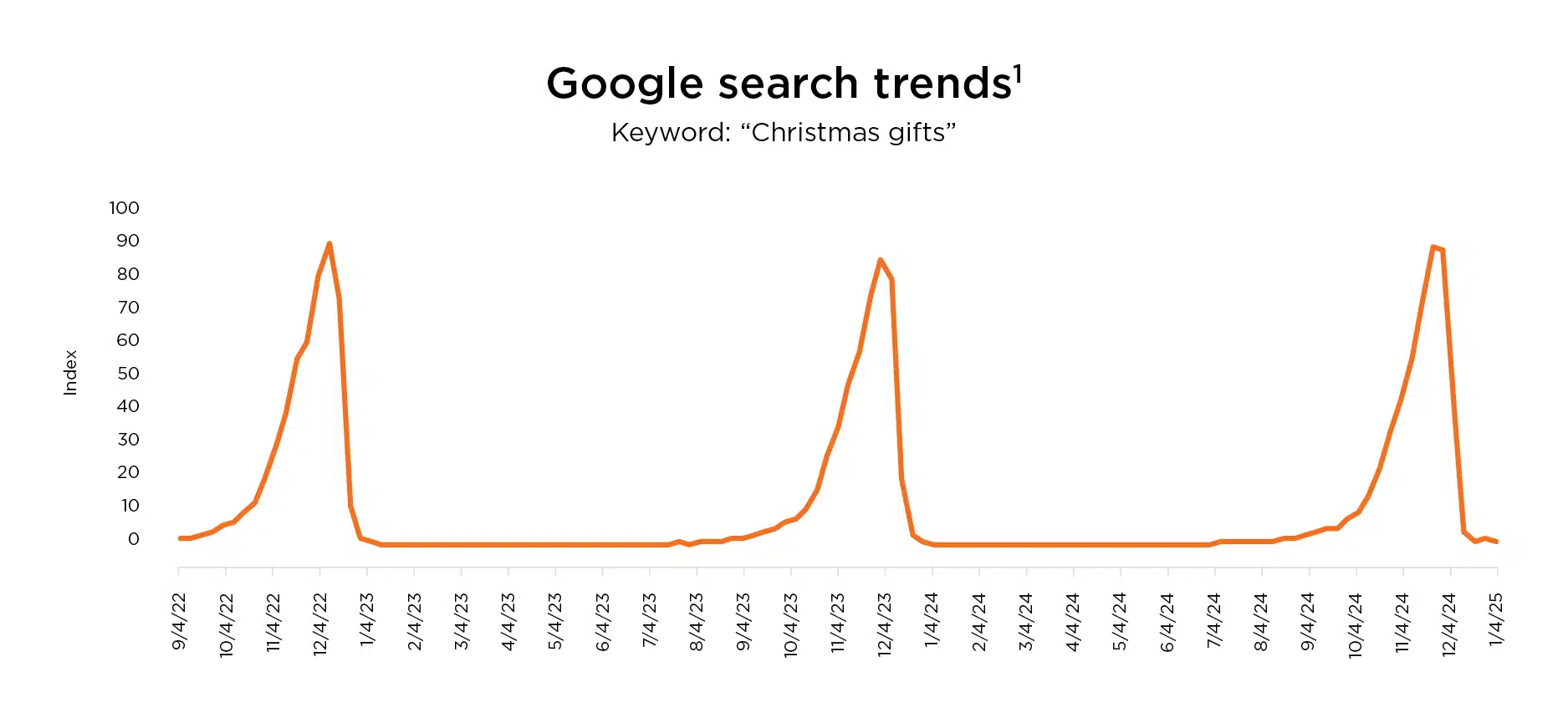
When it comes to navigating the holiday melee, timing is everything. According to Google search trends data from the past three years, interest in holiday gifts starts to ramp up in mid-October.1 Advertising in the months leading up to that point are crucial to influencing consumer decisions.
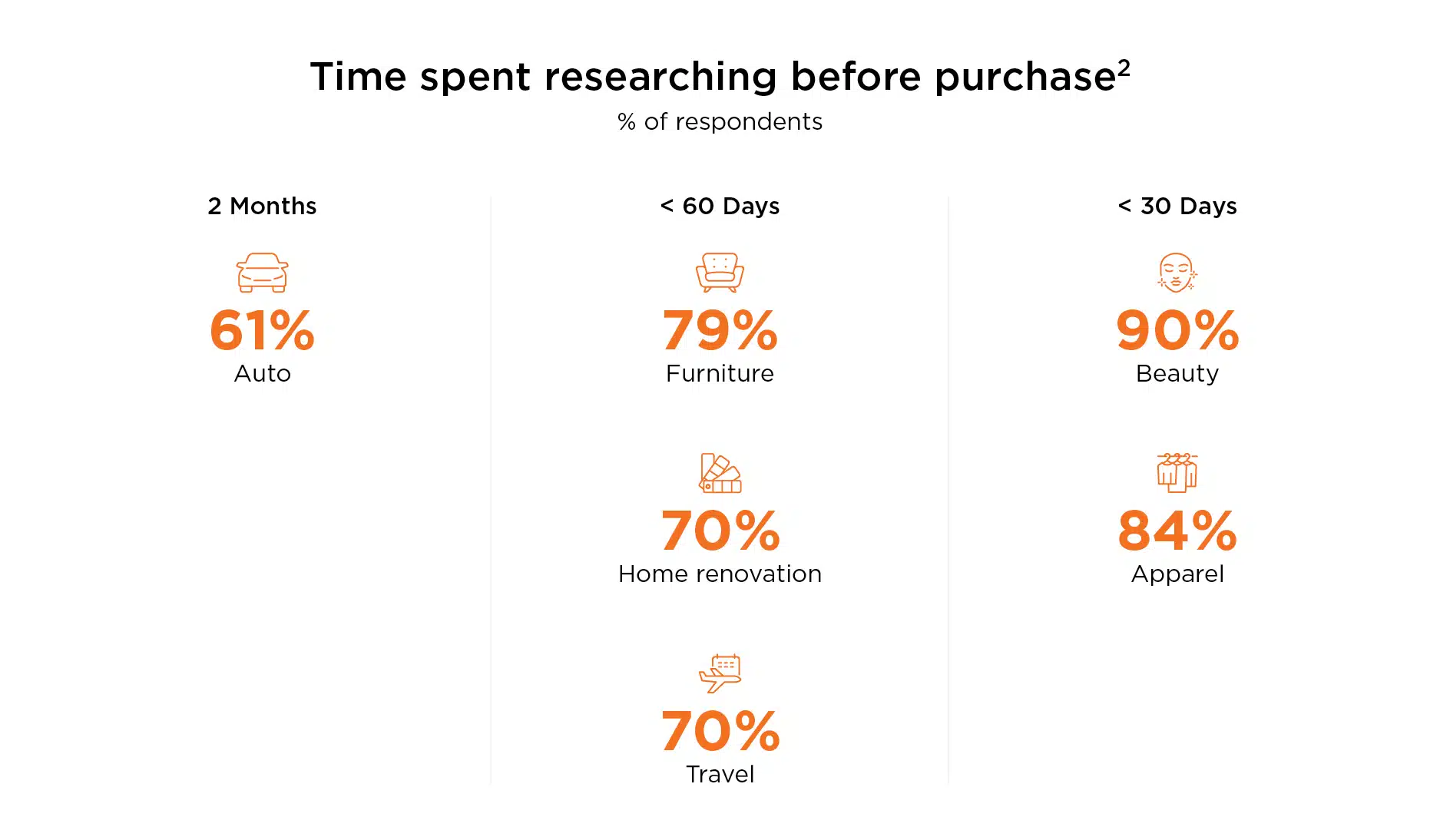
Time spent researching products prior to purchase varies by category. People spend more time in the research phase for high stakes products like a new car and less time for low stakes products like clothing.2 Brands that show up earlier in the season have a better chance of being considered. The next challenge is making sure your brand is recognized and trusted.
2. Brand familiarity drives conversions
Brand recognition plays a major role in purchase decisions. In fact, 78% of people say they typically buy the same brands when shopping.2 But when it comes to considering a new brand, consumers say reviews, quality, sales and brand recognition all play a role.2 Adults age 35-44, the most likely age group to have children under age 18,3 are 37% more likely than other age group to say recognizing the brand is important to their likelihood to purchase.2
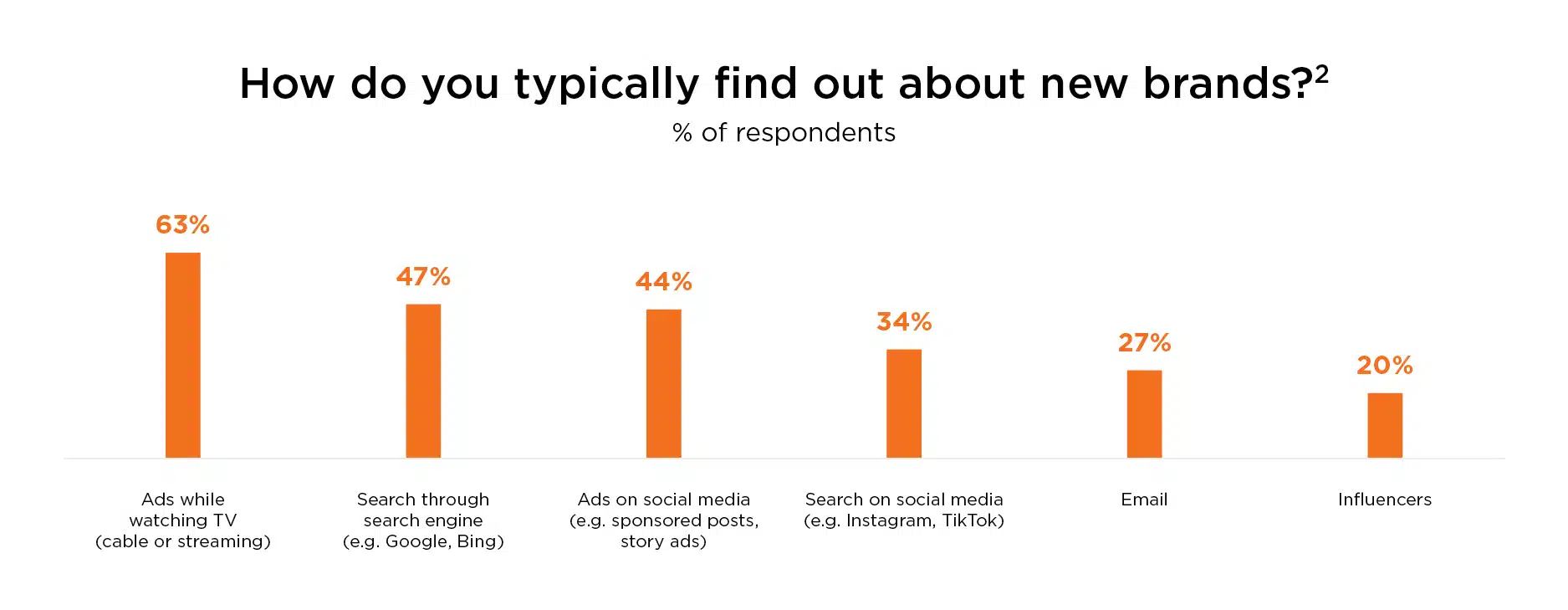
Word of mouth is powerful, but advertising plays a key role in discovery. A recent survey found that TV—in all its forms—outranks other channels like social and search engines when it comes to brand awareness.2 It also ranks higher among consumers for trust than both social media and influencers.2
1 in 3 people only turn to search engines when they are ready to buy. And with 90% of those searches focused on specific brands or products,2 it’s essential that advertisers build brand familiarity before the research phase begins.
3. The right creative inspires action
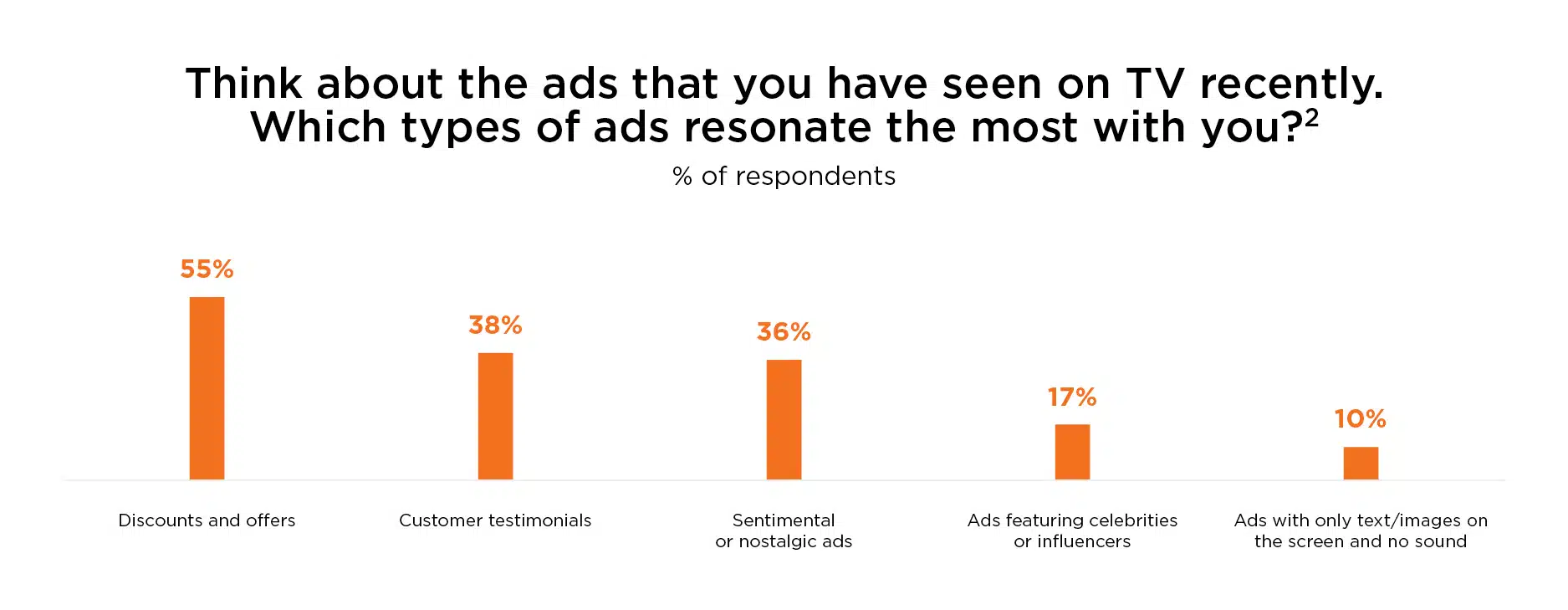
Starting early to build brand awareness is a great first step to holiday campaign success but advertisers need to ensure their creative resonates with audiences as well. People respond best to messaging that blends emotional and rational messaging. Offers, testimonials, and nostalgic ads outperform ads with celebrity endorsements.2 A previous study found that brand-focused messaging helps make an emotional connection to the viewer whereas call-to-action creative is seen as more informative and persuasive.4 Creative messaging that has both brand and call-to-action elements helps support consumers through the purchase funnel from awareness to action.4
4. Small businesses have an advantage
For smaller, local brands and businesses, geotargeting can be extremely effective in reaching potential customers. About 1 in 5 people cite that the business being ‘small or local’ plays into their decision to purchase a new brand or product.2 Over half would consider purchasing from a local business over a brand they would normally buy,2 presenting local businesses with a unique opportunity to reach new customers. However, proximity matters when it comes to small businesses with 80% of people citing they would check how far the business is from them.2 Local businesses need to be strategic when identifying the geographic areas they want to target.
Maximize impact this holiday season
With the holiday rush quickly approaching, advertisers have the opportunity to shape consumer decisions with smart, timely campaigns.
- Start your holiday campaigns early. Don’t wait until it is too late to start advertising this holiday season. Get your message out there now to get on the consumer’s consideration list.
- Balance emotional and rational appeals in ad creative to better resonate with consumers.
- Lean into local. Work with partners that can geo- and audience target for the most efficient campaigns
By nailing the right timing, messaging, and targeting, brands can turn seasonal momentum into measurable holiday marketing success.
Sources:
1. Google trends data for keyword “Christmas gifts.” Sep 2022-Jan 2025. Numbers represent search interest relative to the highest point on the chart for the given region and time. A value of 100 is the peak popularity for the term. A value of 50 means that the term is half as popular.
2. Comcast Advertising consumer survey conducted by Dynata. March 2025, n=1507.
3. U.S. Census Bureau, Less Than Half of U.S. Family Households Include Children Under 18, by Paul Hemez, Clayton Buck, and Lydia Anderson, 11/12/2024.
4. Creative analysis using three distinct commercial messages (Survey conducted by Lucid; Q4 2021; N=1,500).