

With all the ways to watch television programming today, viewership is more fragmented than ever. Getting a handle on which TV shows have the highest ratings, who’s watching the most TV, and how much TV people are watching can overwhelm businesses trying to figure out how to advertise.
Let’s dive into some TV viewership data to see the current state of who’s watching what.
Television viewership today
People are watching a lot of TV, and even with the growth of streaming services, they’re still watching live TV. In 2025, U.S. adults spent about 2 hours and 29 minutes per day tuning in to traditional television.1 And while streaming is trending upward—accounting for an unprecedented 44.8% of TV usage in May 2025—traditional TV still makes up nearly half of all viewing.2
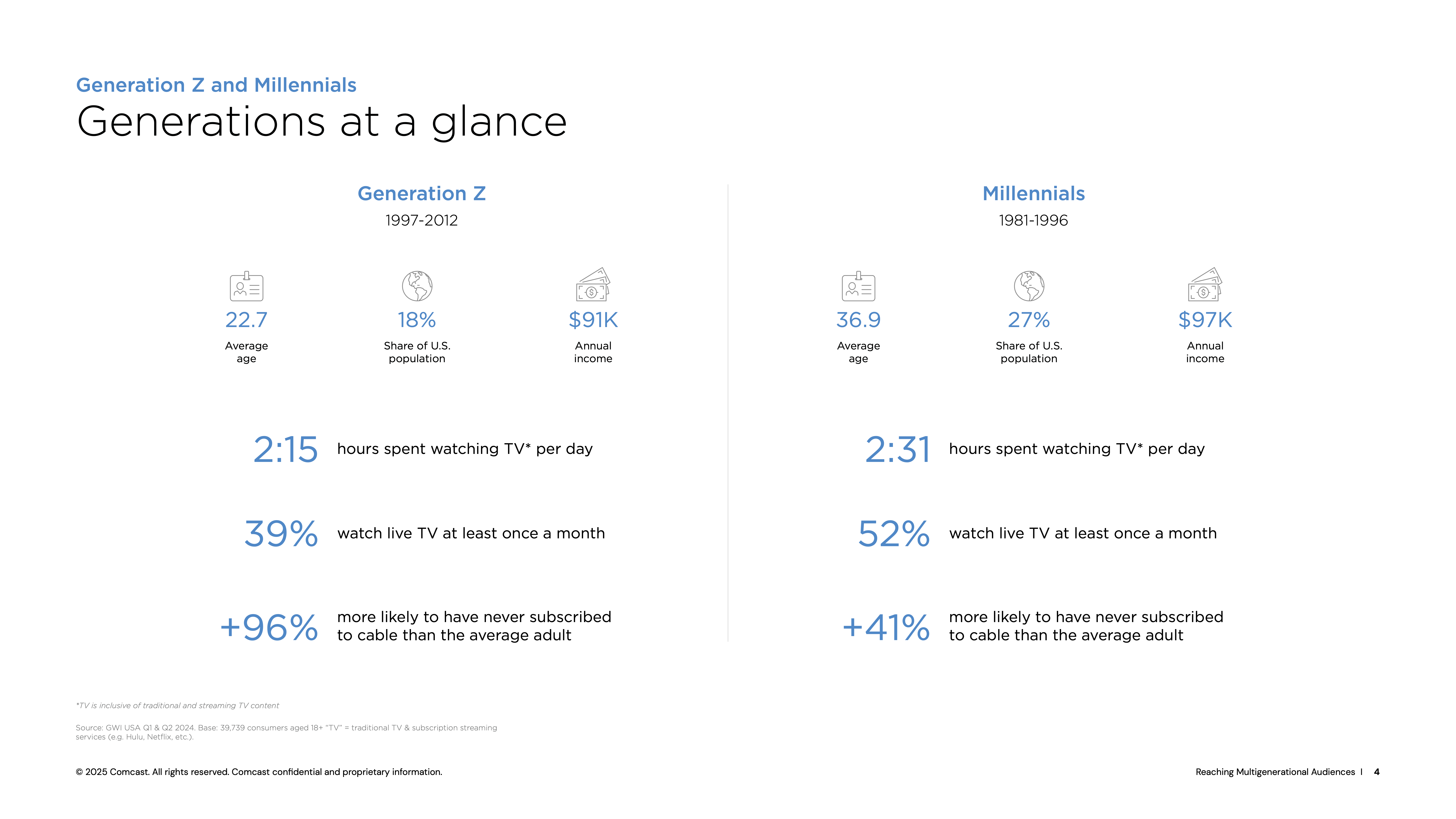
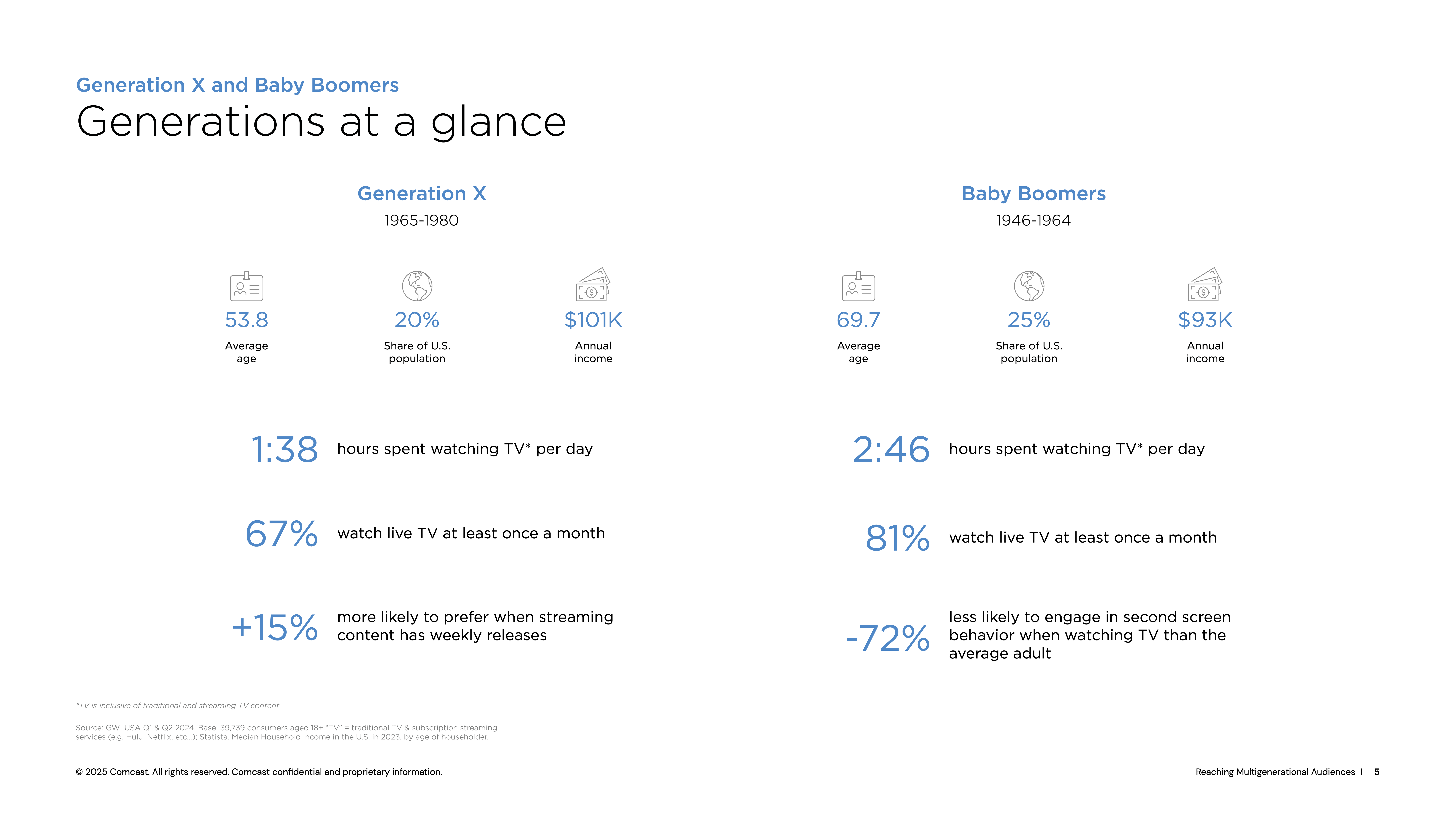
Comcast Advertising’s Reaching Multigenerational Audiences report finds that Gen Z, Millennials, Gen X, and Baby Boomers each spend between 1.5 and 3 hours a day consuming TV content (traditional and streaming combined), with at least some of every generation still watching live TV each month.3
Across generations, viewers are not abandoning TV; they’re simply changing how they watch it and on which platforms. A 2025 Pew survey found 83% of U.S. adults use streaming services, while 36% subscribe to cable or satellite TV, with older adults much more likely to keep a pay-TV subscription.4
Two primary types of programming are driving live TV viewership: news and sports. Pew Research Center reports that about two thirds of U.S. adults (64%) still get news from television at least sometimes, and among those who watch TV news, most say it comes from cable, satellite, or broadcast channels.5 As for sports, NFL and college football made up one third of all broadcast viewing in September 2025, causing broadcast TV viewership to briefly surpass that of cable.6
How is TV viewership measured?
Knowing who’s watching TV matters to both advertisers as well as programming producers. High ratings equal high viewership. Advertisers are willing to pay more for their commercials to air during a show where lots of people are watching. Measuring TV viewership, including ratings and impressions, is very important—and big—business.
Here’s how viewership is tracked by platform:
Broadcast and cable (traditional/linear TV)
Companies like Nielsen conduct household surveys and maintain national and local TV viewer panels, where representative households have meters attached to their TVs to capture what’s being watched.
Streaming and connected TV (CTV)
Nielsen’s national viewer panel includes “streaming-meter enabled” TV households. Additionally, streaming platforms collect viewership data themselves, along with automatic content recognition (ACR) technology in smart TVs.
What does TV viewership mean for advertisers?
Even as viewing shifts to streaming, TV remains a powerful, increasingly measurable advertising channel—especially when you think in terms of platforms working together. Most TV viewing (about 72%–74% in early 2025) happens on ad-supported platforms, including broadcast, cable, and ad-supported streaming platforms,7 giving advertisers many ways to reach audiences at scale.
Here’s what that means by TV type:
Broadcast TV advertising
Broadcast still delivers some of the largest viewership, particularly for live sports, national news, and event programming. These big “shared moments” help brands build broad awareness and cultural relevance across the U.S. and at the local level.
Cable TV advertising
Cable offers genre-based environments (news, lifestyle, sports, entertainment) that can feel more targeted than typical broadcast buys. Local and regional cable inventory lets advertisers focus on specific regions or neighborhoods, allowing small businesses to reach customers close to home.
Connected TV (CTV) advertising
CTV allows advertisers to reach viewers who have shifted away from traditional cable or satellite, especially younger adults who are more likely to be streaming-only. With digital-style targeting and attribution, CTV campaigns can be optimized toward website visits, app engagement, and conversions, making it a strong complement to traditional TV buys.
Multiscreen TV advertising
Viewers of all ages watch both traditional and streaming TV, so it shouldn’t come as a surprise to learn that campaigns that combine linear and CTV ads work together to drive reach and performance. Plus, adding addressable TV to a multiscreen plan delivers over one-third of unique target reach and a +75% increase in total target frequency, helping brands reach specific households without sacrificing scale.3
Reaching the right viewers in a changing TV landscape
The bottom line is that people are not only still watching live TV, but they’re also watching on streaming apps, smart TVs, and multiple platforms at once. Traditional broadcast and cable remain essential for live events and news, while streaming offers audiences control over what, how, when, and where they watch.
For advertisers, the opportunity isn’t choosing one platform over another—it’s designing TV campaigns that follow audiences across screens. With the right data, planning, and measurement, you can use everything from live TV to streaming to get the most impact from your advertising investment.
Ready to level up your marketing through TV? Contact us to start reaching your audience wherever—and however—they’re watching.
Sources:
1. eMarketer, “Traditional TV still dominates daily media time,” 8 July 2025.
2. Nielsen, “Streaming Reaches Historic TV Milestone, Eclipses Combined Broadcast and Cable Viewing For First Time,” June 2025.
3. Comcast Advertising, “Reaching Multigenerational Audiences,” 2025.
4. Pew Research Center, “83% of U.S. adults use streaming services, far fewer subscribe to cable or satellite TV,” 1 July 2025.
5. Pew Research Center, “When Americans say they get news from TV, what do they mean?”, 20 November 2025.
6. tvtech, “Nielsen: September Football Produces “Historic Monthly Spike’ in Broadcast Viewership,” 21 October 2025.
MediaPost, “Nielsen Benchmarks Ad-Supported At 72% Of All TV Viewing,” 1 May 2025.