Despite cautious overall marketing spend, video budgets are splintering, not shifting, finds new Comcast Advertising research.
More than half (55%) of European marketers plan to increase their investment in streaming TV over the next 12 months, outpacing social video (44%) and linear TV (20%), according to new research from Comcast Advertising.
The seventh edition of Comcast Advertising’s Streaming TV Uncovered research reveals how advertisers and agencies across Europe are shaping their video strategies amid cautious marketing budgets. While streaming TV is expected to see the strongest investment growth, the findings highlight ongoing challenges around audience scale, fragmented buying, and measurement.
Cautious budgets, but growth remains the priority
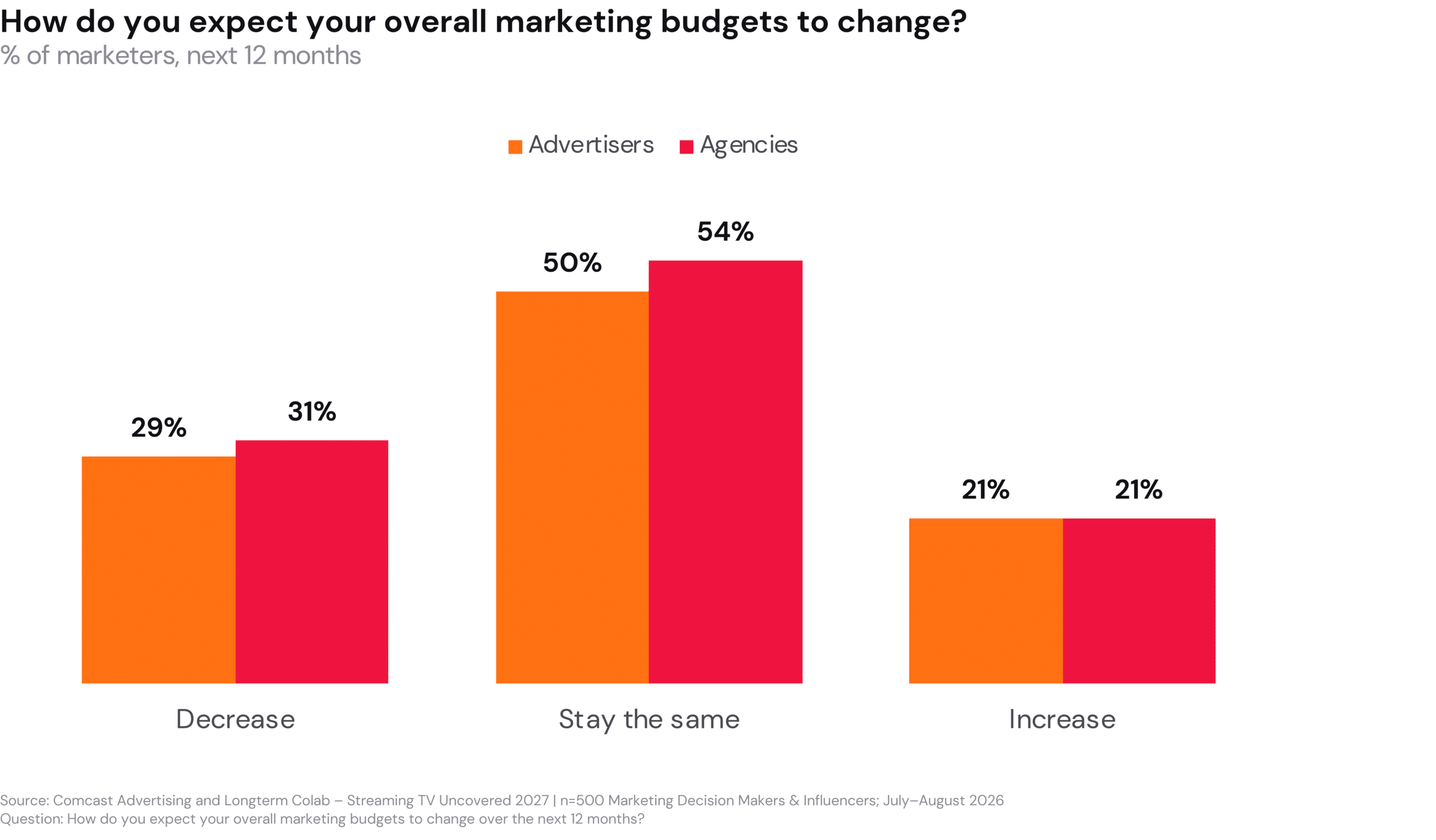
European marketers remain cautious about overall spending, with more expecting budgets to stay flat compared with last year. However, sentiment varies across markets, with the UK and France showing relatively greater optimism, recording net anticipated budget changes of +7 and +1, respectively.
Despite this caution, growing revenue and market share is now marketers’ leading objective, selected by 59% of respondents, up from second place in 2025. Customer acquisition (55%) has also overtaken retention (53%), reflecting an increased focus on near-term growth.
At a sector level, online retail/retail and luxury goods are seeing the strongest budget growth, at 11%, followed by consumer electronics at 5%. Meanwhile, FMCG, which led budget growth in 2025, has fallen to fourth place.
Flaminia Sapori, Executive Director, Supply Investment EMEA, Omnicom Media commented: “As marketers face growing pressure to demonstrate the value of every investment, premium streaming video presents a significant opportunity for growth. But unlocking its full potential requires the industry to move beyond fragmented access and measurement. We need a more unified approach that makes premium video easier to buy at scale, through the platforms advertisers already use, with greater transparency and consistency in how outcomes are measured. The opportunity for streaming is to prove the value it adds to the wider video mix, not simply compete for a bigger share of it.”
Generative AI and automation cement their role as leading growth strategies
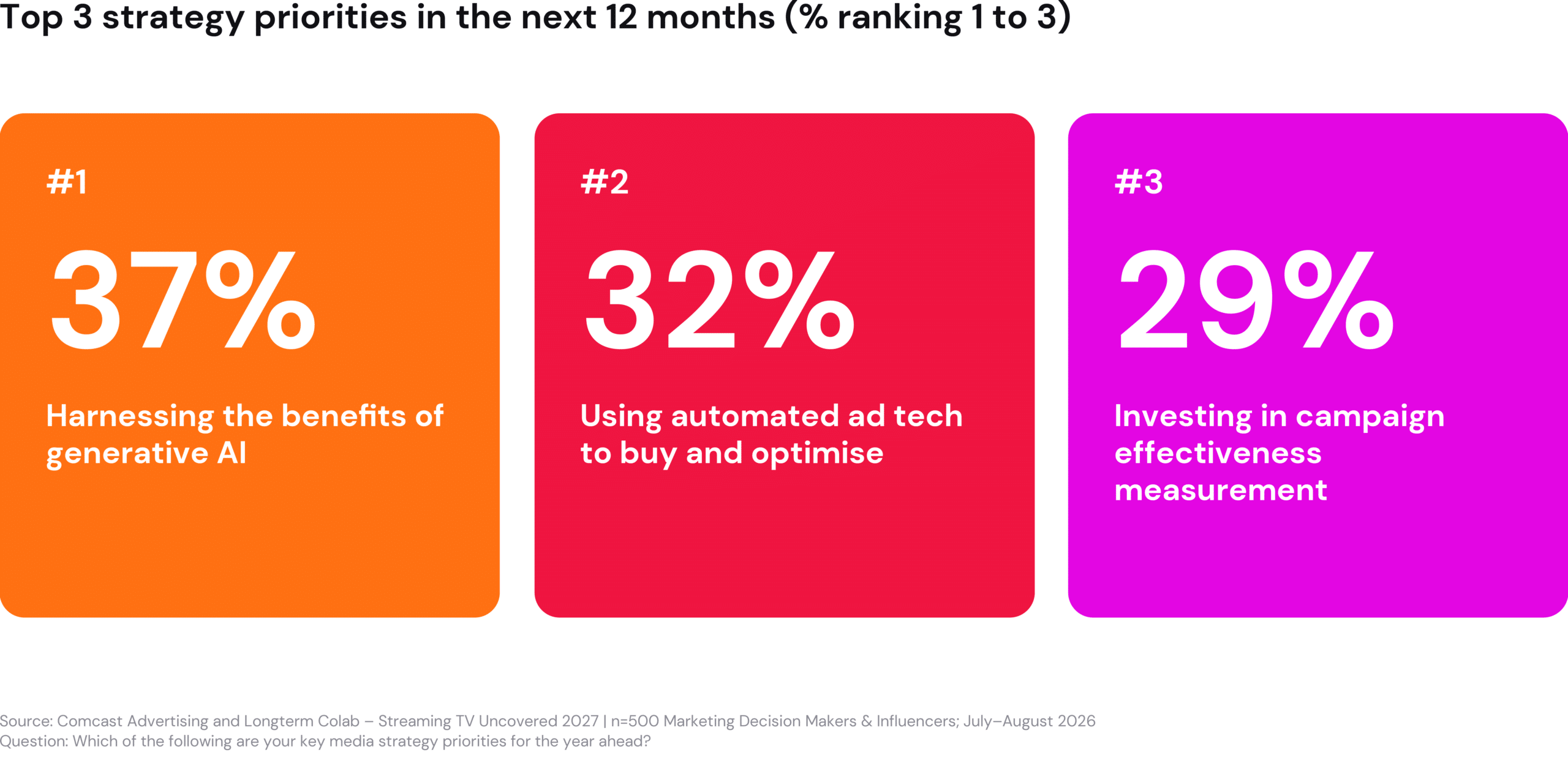
Technology is playing a central role in achieving these objectives. Harnessing generative AI remains marketers’ leading strategy (37%), followed by automated technology to buy and optimise media (32%). This points to continued interest in using technology to improve outcomes along with achieving efficiency amid constrained budgets.
Video investment shifts towards effective multi-channels
The research reveals an increasingly fragmented European video landscape, with marketers distributing budgets across multiple channels rather than simply replacing traditional TV with digital alternatives.
Social and online video now accounts for the largest share of overall TV and video budgets, rising from 18% in 2025 to 28%. However, linear TV’s share has also increased, from 12% to 15%, suggesting that growth in digital video is not necessarily coming at the expense of traditional television.
Significant differences exist between markets:
- Germany: Social and online video’s share has climbed from 19% to 35%.
- Italy: Linear TV commands the highest share of video budgets, at 30%.
- France: AVOD and FAST account for the strongest allocation.
- Spain: Subscription streaming is particularly prominent.
Within this increasingly multichannel landscape, streaming TV is set to see the strongest investment growth, with 55% of European marketers planning to increase spend across subscription streaming, AVOD, broadcaster video on demand (BVOD), and FAST over the next 12 months. Confidence is particularly strong in the UK and Italy, where this figure rises to 60%.
Reach is the key to unlocking investment; scale remains the biggest barrier
The research also highlights a gap between marketers’ appetite for streaming TV and its ability to access audiences efficiently.
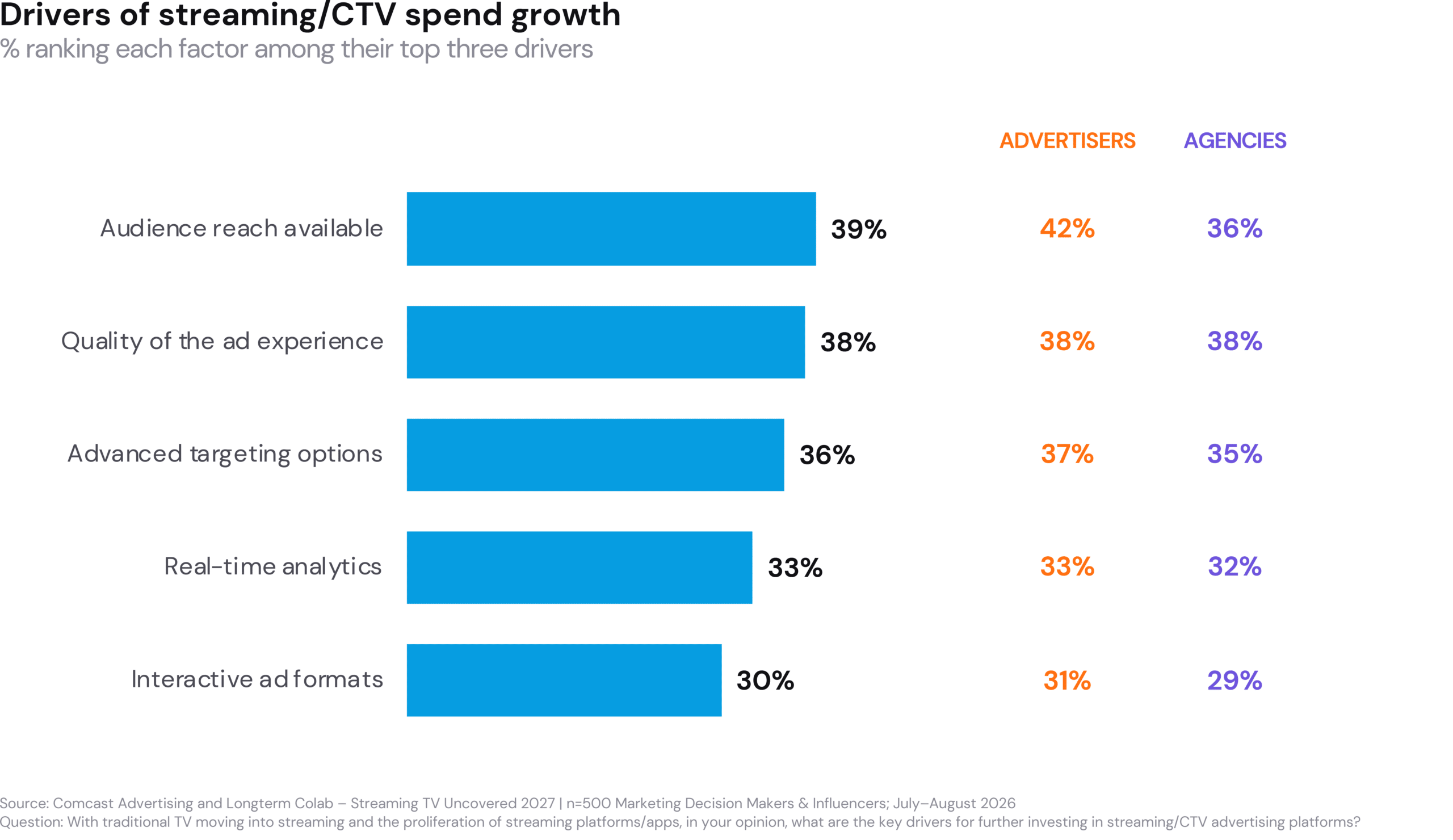
Audience reach is the leading factor that would encourage further investment (39%), followed by the quality of the advertising experience (38%), and advanced targeting capabilities (36%).
However, limited audience scale is also the biggest barrier to increasing investment (39%), closely followed by fragmentation across platforms and buying tools (38%). More than a quarter of marketers (28%) cite the effectiveness of other channels as a reason not to increase streaming investment.
Premium video is about the viewing experience and attention, not simply reach
While scale remains critical to investment decisions, marketers primarily define premium video by the quality of the viewing and advertising experience (70%), high audience engagement (54%), with transparency ranking lower at 29%.
To encourage greater investment, marketers are calling for more transparent pricing (37%), simpler planning and budget allocation (35%), better understanding of reach and frequency (35%), and easier performance and ROI measurement (33%).
Supply curation could help address these challenges, with improved targeting (31%) and buying efficiency (30%) identified as its main benefits.
Emmanuel Josserand, Sr. Director, Brand, Agency and Industry Relations, Comcast Advertising said: “Marketers recognise the unique value of streaming TV, from high-quality viewing environments to engaged audiences. However, while these premium qualities are well established, scale remains a key challenge. For streaming TV to truly compete for advertising investment, the industry must give marketers greater confidence in what they are buying, make it easier to reach audiences at scale, plan and buy across platforms, and measure campaign performance. Greater simplicity, transparency and comparability will be essential to realising streaming’s full growth potential.”
* For the purposes of this article, the UK, France, Germany, Italy, and Spain will collectively be referred to as “European marketers”.