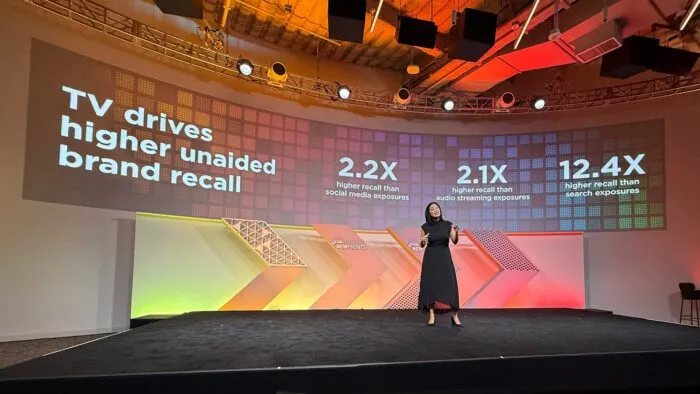
Brands have always known that both traditional TV and streaming drives reach and awareness, but more than ever they are seeking capabilities that show performance for their advertising investments.
Historically, it has been difficult to demonstrate TV’s impact on middle and lower-funnel business outcomes compared to channels with last-click attribution. That is why Comcast Advertising has been innovating to ensure brands can prove the value of their TV media spend just as they can their digital campaigns, through technology advancements and strategic partnerships.
Last year, we announced a partnership with Mastercard to link TV ad exposure to spending trends for advertisers of all sizes – and since then we’ve been able to help brands prove that TV excels at driving real in-store sales.
To share more about how we’re working together to improve TV advertising attribution, we sat down with Scott Lichtenthal, SVP, Advanced Analytics, at Mastercard.
Q. What problem does this partnership aim to solve?
A: Advertisers increasingly want measurement that goes beyond reach and frequency, and TV is no different – especially as it evolves across linear, addressable, and streaming environments. Mastercard and Comcast Advertising share a common goal to help advertisers achieve those better outcomes, and we’re doing just that by bringing together Comcast’s high-quality exposure data with Mastercard’s data-driven insights.
Q. What makes this joint approach different from traditional TV attribution methods?
A: Comcast Advertising brings deterministic, market level TV exposure signals across premium content and local markets while Mastercard contributes comprehensive views of spending trends, built from aggregated and anonymized data-driven insights.
When those assets come together, advertisers move beyond asking “Did my TV campaign reach people?” to better understanding how it may have influenced real-world outcomes. Where traditional methods rely on panels or siloed channel reporting, this partnership enables direct, outcome-based measurement that reflects purchase activity for consented consumers.
Mastercard’s unique position in the center of the ecosystem and our rigorous standards for privacy, data responsibility, and statistical integrity, are crucial to being able to connect signals and turn intelligence into actionable insights. But importantly, both teams approached this as a co development effort, not a one off integration. From early pilots and case studies through scaled, always on measurement, there was shared investment in getting the methodology right, building trust with advertisers, and creating something that could grow over time.
Q. Why is “partnerships over isolation” becoming increasingly important for solving complex challenges like TV attribution?
A: It’s simple: No single company has a complete view of the consumer journey, but partnerships like this one allow complementary signals to come together responsibly and create a more complete and meaningful picture of performance.
Q. How do you see the future of advertising measurement evolving?
A: Across the board, advertisers are increasingly looking for always on insight to help inform planning and optimization. Measurement is moving closer to real time, with insights that inform not just post campaign reporting but in flight decisions. For TV specifically, that shift allows it to move from a “measure and report” channel to a more continuous “measure, learn, and optimize” system.
Q. What excites you most about continuing or expanding this partnership?
A: What’s most exciting is that we’re still early in what’s possible. There’s so much opportunity to expand this work across more advertisers, categories, markets, and use cases. More precise measurement is what demonstrates how advertising drives real outcomes.
To learn how these solutions can power results for your brand, connect with us today.