Millennials have experienced every major shift in the modern media landscape. They sat in front of the TV for weekly episodes, embraced streaming when Netflix evolved beyond DVD rentals, and were the first generation to adopt digital video platforms like YouTube.
Now, Millennials represent the largest generation in the workforce and account for nearly 30% of all U.S. retail spending making them a valuable audience for advertisers.1
With media fragmentation at an all-time high, brands need to understand how Millennials currently engage with content to know how to connect with them.
Here are three things advertisers should know about Millennial content consumption:
Mood and Fandom Drive Viewership
Millennials are multiscreen viewers, spending a couple of hours each day with streaming and traditional TV.2 And much of what they choose to watch is often influenced by how they feel, with nearly 70% saying their mood dictates content selection.2 They continue to embrace binge-watching, and more than half (51%) attribute the habit to the addictive nature of the content.3
They are also highly engaged fans. Whether it’s a favorite show, artist, sports team, or franchise, Millennials will follow the content they love across platforms, screens, and live experiences. In fact, 67% of Millennials say they engage with their fandoms across multiple platforms and touchpoints.4
For Millennials, where the content lives matters less than the content itself. Advertisers who run a multiscreen TV campaign across premium inventory have a greater chance at reaching Millennials wherever their content takes them.
Relevant and Local Ads Resonate
Millennials are especially receptive to ads that feel relevant to their interests and community. They gravitate toward brands that align with the content, experiences, and causes that they care about, and they are more likely to trust ads that evoke emotion.3
Small and local businesses hold particular appeal for this generation. In fact, 75% of Millennials say they like to see ads from small businesses.2 Most (59%) even report purchasing a product simply because it was sold by a small business.5
Their support of local businesses extends beyond the occasional purchase. On average, Millennials spend nearly $20,000 each year on purchases at local businesses, underscoring their commitment to their local communities.6
For advertisers, relevant messaging paired with authentic storytelling can help build meaningful connections and drive real impact with Millennials.
Sports Advertising Boosts Performance
Sports advertising is well received and incredibly effective at bolstering engagement among Millennials. Nearly three-quarters (73%) of Millennials respond positively to ads during sports programming.7 They are significantly more likely to think ads enhance the sports viewing experience (compared to the average fan),4 and that positive sentiment translates into action.
More than 70% of Millennials have taken action after seeing an ad run on sports programming, including visiting a brand’s website or social channels, and they are 85% more likely to make a purchase.7
And Millennials engage with more than the game itself. They are the generation most likely to consume shoulder content, including sports talk shows and pre- or post-game coverage.7
Sports advertising offers brands a powerful way to engage Millennial sports fans, providing an environment that commands attention and inspires action in real time.
Connecting with Millennials
For Millennials, the couch and cart are already connected. Nearly 8 in 10 shop online while watching TV, making them the most commerce-driven generation and giving TV significant influence over purchase decisions.8 In fact, according to TV Scientific, 65% of Millennials have made a purchase after seeing a TV ad,8 reinforcing TV’s ability to drive engagement and action.
From fandom-driven viewing habits to their support of local businesses and enthusiasm for sports, Millennials reward brands that understand what matters to them. Advertisers that pair premium content with emotionally resonant messaging will be better positioned to capture their attention, build trust, and drive performance.
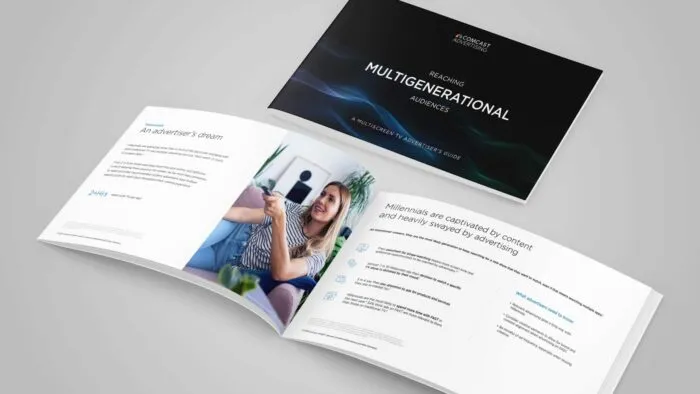
For additional insights on connecting with Millennials and other generations, download Comcast Advertising’s Reaching Multigenerational Audiences report.
Sources:
1. eMarketer, “FAQ on Millennials: How brands can reach this generation in 2026,” Feb 2026.
2. Comcast Advertising, “Reaching Multigeneration Audiences,” 2025.
3. Comcast Advertising Survey through Cint. September 2023. N=1739. Qualifying Criteria: Viewers with access to streaming services in their household.
4. Deloitte, “2026 Digital Media Trends: Capturing always-on fandom between releases and seasons,” March 2026.
5. Capital One, “Millennial Shopping Statistics,” March 2026.
6. On Deck, “What Consumers Think About Shopping Local,” April 2026.
7. Comcast Advertising Survey through Kantar. April 2024. N=1000. Qualifying Criteria: Watched sports content (game, highlights, talk show, etc…) in the P6M.
8. TVScientific, “Your Guide to Millennials in 2026: How TV Advertising Tuns Consideration Into Action,” July 2026.